Why Documentation Always Loses the Sprint Fight (And How to Finally Change That)
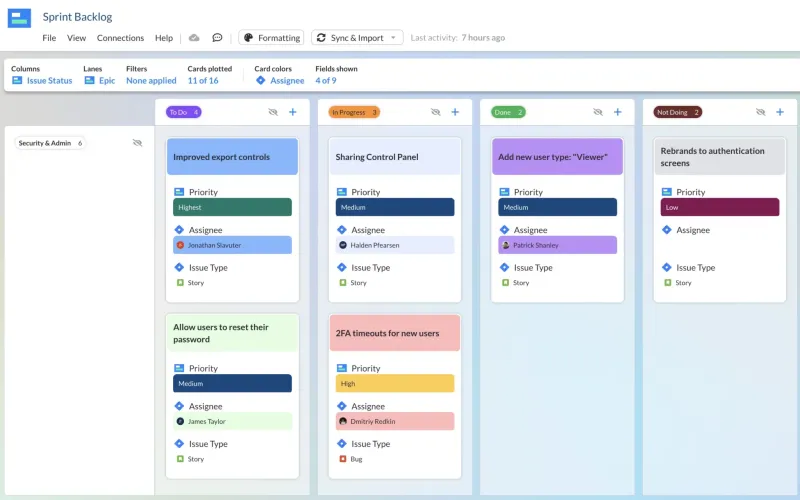
Photo: developer sprint planning board sticky notes backlog, via www.visor.us
Picture your last sprint planning session. The board fills up fast — new features, bug fixes, performance improvements, maybe a security patch that snuck in at the last minute. Then someone mentions documentation. There's a brief pause. Someone else says, "We'll get to it next sprint." Everyone nods. The ticket slides to the bottom of the backlog.
Next sprint, same thing.
This isn't a story about lazy engineers or managers who don't care. It's a story about incentives, prioritization frameworks, and a structural bias baked into how most engineering teams measure progress. Documentation doesn't ship features. It doesn't close bugs. It doesn't move a needle that shows up on a product roadmap. So it waits. And waits. And the gap between what your codebase actually does and what your docs say it does gets wider every single week.
The Mechanics of Documentation Debt
Technical debt is a concept most developers understand intuitively — shortcuts taken today that you'll pay interest on later. Documentation debt works the same way, but it's sneakier. When you skip a code comment or delay writing up a new API endpoint, the immediate cost is invisible. Nobody trips over it that afternoon. The pain shows up weeks later when a new hire spends three days reverse-engineering a module that should have had a two-paragraph explanation. Or when a customer opens a support ticket because the integration guide never got updated after the v2 release.
The compounding effect is real. A single undocumented function is a minor inconvenience. Fifty of them, spread across a codebase that's been in production for two years, is a genuine productivity crisis. Teams start building tribal knowledge — unwritten rules that live in Slack threads and the heads of engineers who might leave next quarter. The documentation backlog doesn't just grow; it becomes increasingly expensive to address because the context needed to write accurate docs fades over time.
Why Features Beat Docs Every Single Time
Here's the uncomfortable truth: in most engineering organizations, documentation loses the sprint fight because the system is designed to make it lose.
Feature velocity is visible. Stakeholders can see a new dashboard, a new API endpoint, a faster load time. Documentation improvements are largely invisible until their absence causes a problem. Product managers are measured on shipping. Engineers are often evaluated on commits and closed tickets. Neither role has a strong incentive structure that rewards writing thorough docs before moving on to the next thing.
There's also a psychological component. Most engineers genuinely intend to come back and document their work. The intention is real. But cognitive context — the mental model you hold while building something — evaporates fast. Two weeks after shipping a feature, the engineer who built it has moved on mentally. Writing docs now means reconstructing that context from scratch, which feels harder and less satisfying than just building the next thing. So it keeps getting pushed.
The Hidden Cost Your Velocity Metrics Miss
Teams that chronically underdocument often believe they're moving faster. In the short term, they might be right. But the productivity tax gets collected in other ways that don't show up on a burndown chart.
Onboarding slows down. New engineers can't self-serve answers, so they interrupt senior teammates constantly. Those interruptions don't look expensive in isolation — a five-minute Slack exchange here, a thirty-minute pairing session there — but they add up to hours of lost focus time every week. Research consistently shows that context-switching is one of the biggest productivity drains for knowledge workers, and underdocumented codebases are a factory for it.
Incident response gets messier too. When something breaks at 2 a.m., the team that has clear runbooks and up-to-date architecture docs resolves it faster than the team that's digging through commit history trying to figure out why a service is configured the way it is. The difference isn't just speed — it's stress, and stress drives attrition.
Treating Documentation Like a First-Class Deliverable
The teams that escape this trap share a few common practices, and none of them are particularly exotic. The main shift is philosophical: documentation isn't something you do after the work is done. It's part of the definition of done.
Build docs into your acceptance criteria. If a ticket ships without updated documentation, it isn't actually closed. This sounds simple, but it requires buy-in from product and engineering leadership to stick. When docs are part of the done criteria, they stop being optional.
Allocate sprint capacity explicitly. Some teams reserve a fixed percentage — often around 10 to 15 percent — of each sprint for documentation and knowledge-sharing work. This creates a protected budget that doesn't get cannibalized by feature pressure. It also signals to the team that documentation time is legitimate work time, not something you squeeze in on Friday afternoons.
Assign ownership, not just responsibility. Responsibility without ownership is how things fall through cracks. Designate a documentation owner for each major component or service. That person doesn't have to write everything — but they're accountable for making sure the docs stay accurate and complete. Rotate ownership regularly so the knowledge doesn't silo.
Write docs while the context is hot. The best time to document a feature is immediately after shipping it, not a month later. Some teams block thirty to sixty minutes post-ship specifically for this. It feels like overhead until you experience the alternative — trying to reconstruct your own thinking six sprints down the road.
Getting Leadership to Care
If you're an individual contributor trying to change your team's documentation culture, the hardest part is often making the business case to people who control sprint priorities. Abstract arguments about "knowledge sharing" don't land as well as concrete numbers.
Try this: track and share the cost of documentation gaps. Log instances where missing or outdated docs caused a delay, a support escalation, or a slow onboarding. Over a few months, you'll have a data story that's hard to ignore. Engineering leaders respond to evidence that documentation debt is creating measurable drag on the metrics they already care about — velocity, incident resolution time, onboarding ramp.
You can also frame documentation investment as risk management. Every undocumented system is a bus factor risk. If the one engineer who understands a critical service leaves, what happens? Documentation is insurance against that scenario, and most leaders understand insurance.
The Backlog Isn't Going to Shrink on Its Own
Documentation debt has a way of feeling manageable right up until it isn't. Teams tell themselves they'll catch up during the next slow period, but slow periods rarely arrive on schedule. The backlog grows. The gap widens. The catch-up effort, when it finally becomes unavoidable, is painful and disruptive in ways that a steady documentation practice would never have required.
The teams that figure this out early don't necessarily have more time than everyone else. They've just stopped treating documentation as a separate, lower-priority track that competes with real work. For them, it is the real work — just as much as the code it describes.
That reframe is available to any team willing to make it. The sprint board is a choice. Make documentation part of the choice.