Stale Docs Are a Silent Killer: How to Stop Your Documentation from Rotting in Place
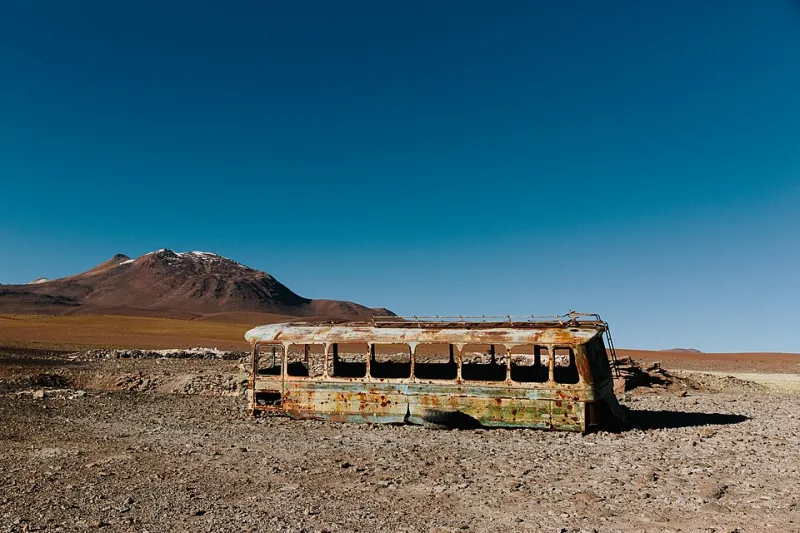
Photo: Pablo Garcia Saldaña pagsa_, CC0, via Wikimedia Commons
There's a particular kind of frustration that every developer knows. You're new to a codebase, or maybe you're debugging something at 11 PM, and you find the documentation. It looks authoritative. It's got headings, code snippets, maybe even a nice diagram. You follow the steps. Nothing works. You dig deeper. The API endpoint referenced hasn't existed since 2021.
Welcome to the documentation graveyard.
Here's the uncomfortable truth most engineering teams avoid: documentation that's wrong is actually worse than no documentation at all. A blank page tells you nothing. A confidently wrong page sends you in the exact wrong direction — and you trust it, because it looks like someone put work into it.
The Real Cost of Docs Nobody Maintains
When teams talk about technical debt, they usually mean code. Messy abstractions, outdated dependencies, tests that nobody runs. But documentation debt is just as real, and it compounds in ways that are harder to measure.
Consider onboarding. A new engineer joins your team and spends their first two weeks following a setup guide that references a Docker configuration your team deprecated eight months ago. They spend hours troubleshooting, eventually Slack-messaging a senior engineer who's juggling three other things. That senior engineer loses 45 minutes walking them through the actual setup. Multiply that by every new hire, every contractor, every developer who touches that project from the outside.
Now consider production bugs. A services team at a mid-sized SaaS company — the kind of shop running a handful of microservices with rotating on-call responsibilities — traced a recurring incident back to a runbook that described the wrong order for restarting dependent services. The runbook was two years old. Nobody had updated it after a refactor. The engineer on call followed it exactly as written, and the cascade failure it caused took four hours to unwind.
Stale docs aren't passive. They're actively harmful.
Why Docs Go Stale in the First Place
The root cause isn't laziness. Most developers genuinely want good documentation — they just deprioritize updating it because nothing in the typical engineering workflow enforces it.
Code gets reviewed. Tests catch regressions. But documentation changes are rarely required as part of a pull request, and when they are, the review is usually cursory. "Looks good" on a doc update almost never means someone actually ran the instructions.
There's also the problem of ownership. When documentation lives in a wiki — Confluence, Notion, a GitHub repo that nobody's starred — it tends to become everyone's responsibility and therefore nobody's. Features ship, APIs change, and the docs just... sit there, slowly drifting from reality.
Treating Docs Like Code (Because They Are)
The teams that have cracked this problem share one mindset shift: they stopped treating documentation as an artifact and started treating it as infrastructure.
That sounds abstract, but it has concrete implications.
Automated testing for code examples is one of the highest-leverage changes a team can make. If your docs contain code snippets — and they should — those snippets should be tested in CI the same way your application code is. Tools like doctest in Python, or custom test harnesses that pull examples directly from markdown files, can catch the moment a code sample stops working. You'll know before your users do.
Documentation debt audits are the other side of the coin. Every quarter — or at minimum, twice a year — someone on the team should walk through the documentation with fresh eyes and flag anything that's drifted. This doesn't have to be a massive project. A simple spreadsheet with columns for page, last verified date, and status is enough to start. The goal is visibility. You can't fix what you can't see.
Some teams have had success assigning a rotating "docs shepherd" role — someone who's responsible for documentation health for a sprint or a month, similar to how on-call rotations work for infrastructure. It distributes the burden and keeps the habit alive without burning any single person out.
The Living Artifact Mindset
The phrase "living documentation" gets thrown around a lot, but what does it actually mean in practice?
It means documentation has a lifecycle, just like code. It's written, reviewed, shipped, and eventually deprecated or updated. It means your README isn't a monument — it's a working document that should be touched regularly. It means that when a feature changes, updating the docs isn't optional housekeeping; it's part of the definition of done.
Some of the most effective engineering teams build this into their PR templates. Before a pull request can be merged, the author answers: Does this change require a documentation update? If yes, is that update included here? It's a small friction that pays significant dividends.
Platforms like PlatformDoc are built around exactly this idea — that documentation should be collaborative, version-controlled, and treated with the same rigor as the software it describes. When docs live alongside code, when they're open to contribution and review, they're far less likely to quietly rot.
Recovery Is Possible (But It Takes Honesty)
If your documentation is already in graveyard territory, the recovery path isn't glamorous. It starts with an honest audit — figuring out what you actually have, what's accurate, and what's actively misleading.
From there, prioritize ruthlessly. Not every outdated page needs to be fixed immediately. Start with the docs that get the most traffic: onboarding guides, API references, runbooks for your most critical systems. Mark everything else clearly as "unverified" or "under review" so that readers know to proceed with caution. A warning banner is better than false confidence.
Then build the systems to keep it from happening again. Automated tests. Ownership assignments. Audit cadences. Make documentation health a metric your team actually cares about.
The graveyard doesn't have to be permanent. But you have to be willing to walk through it first.