Dead Docs Walking: Why Deprecated Documentation Keeps Coming Back to Haunt Your Team
Here's a scenario that probably sounds familiar. You deprecated a set of API docs eight months ago. You even added a little banner at the top that said "This page is no longer maintained." And yet, last Tuesday, a developer on your team built a new integration using exactly those deprecated endpoints — because that was the page Google indexed, that was the link Slack surfaced, and that was the doc that looked the most complete.
Congratulations. Your dead docs just cost you a sprint.
The graveyard problem in documentation isn't really about old content existing. It's about old content functioning — still getting found, still getting trusted, still getting used as a foundation for new work. And until engineering teams take deprecation as seriously as they take shipping, this cycle is going to keep repeating.
Why Teams Can't Stop Resurrecting Old Docs
Let's be honest about what's actually happening here, because it's not just a tooling problem.
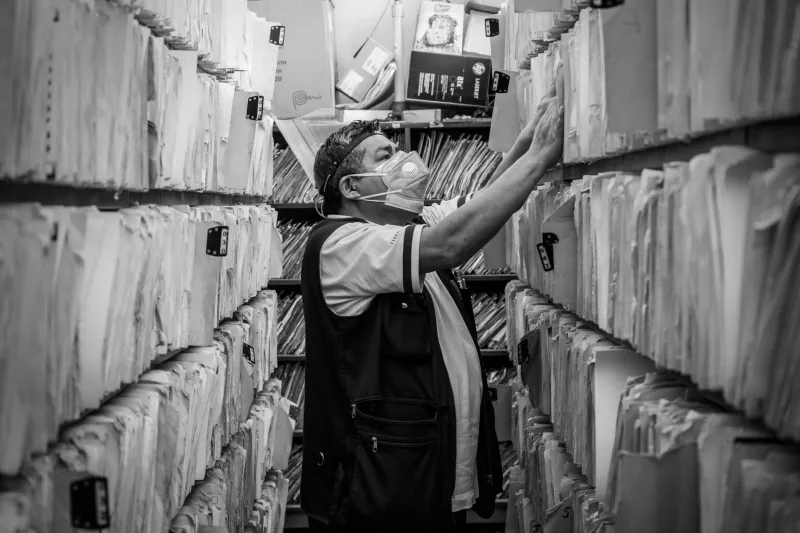
When teams deprecate documentation without a real protocol, they leave a half-buried corpse. The old page still exists at its original URL. Search engines still rank it. Bookmarks still point to it. And because the replacement doc — if one even exists — was written in a hurry and doesn't have the same depth or context, the old one feels more authoritative.
There's a psychological element to this too. Developers are pragmatic. When they're under deadline pressure and searching for answers, they're not going to stop and audit the freshness of every doc they land on. They're going to use what's in front of them. Incomplete deprecation processes exploit exactly this tendency, creating a false sense of reliability around content that should have been put to rest months ago.
Organizationally, there's another force at play: the sunk cost reflex. Teams spent real time writing those old docs. Fully removing them feels wasteful, even reckless. So instead of a clean cut, they get a soft deprecation — a banner, a note, maybe a redirect that works 70% of the time. That half-measure keeps the old content just alive enough to cause problems.
What a Real End-of-Life Protocol Actually Looks Like
Retiring documentation properly is less about deletion and more about ceremony. The process needs to be deliberate, visible, and — most importantly — complete.
Here's what a functional deprecation protocol needs to cover:
Ownership and trigger criteria. Someone has to own the decision to deprecate, and there should be a clear set of conditions that trigger a review. A version sunset, a product discontinuation, a significant architectural change — whatever the trigger is, it should be defined in advance, not decided ad hoc.
A replacement path, not just a redirect. The single biggest reason deprecated docs get resurrected is that the replacement doesn't actually answer the same questions. Before you mark something deprecated, verify that the new content covers the same ground. If it doesn't, that gap needs to be filled first. A redirect to a page that doesn't help is just a slower way to confuse someone.
Active de-indexing and link hygiene. Deprecated content should be removed from your internal search index and, where possible, de-indexed from public search engines. Every internal link pointing to the old doc needs to be updated. This is tedious. Do it anyway. Leaving those links in place is the equivalent of keeping a wrong phone number on your business card.
A time-bounded archive strategy. Some deprecated docs genuinely need to stick around for a while — legacy system support, compliance reasons, historical reference. That's fine, but "archive" and "active documentation" need to be clearly separated, both visually and architecturally. Archived content should live in a distinct section, carry a consistent visual treatment, and be explicitly excluded from default search results.
A formal sign-off step. This sounds bureaucratic, but it works. Require a quick sign-off from a technical lead or documentation owner before deprecation is finalized. That moment of accountability forces the question: Is this actually ready to retire, or are we just tired of maintaining it?
The Hidden Cost of Soft Deprecation
Teams often avoid full deprecation because it feels risky. What if someone still needs that content? What if we delete something important?
Those are reasonable concerns. But they need to be weighed against the cost of what happens when soft deprecation becomes the default.
When developers accidentally build on deprecated foundations, you're not just looking at wasted sprint cycles. You're looking at compounding technical debt, integration failures, security vulnerabilities from outdated practices, and — maybe worst of all — eroded trust in your documentation as a whole. If your team learns that docs can't be trusted to be current, they stop consulting them. At that point, institutional knowledge lives entirely in people's heads, and you've traded a documentation problem for a knowledge management crisis.
The math here isn't complicated. The short-term discomfort of a thorough deprecation process is almost always cheaper than the recurring cost of zombie docs doing damage in the background.
Making Deprecation a First-Class Engineering Practice
The teams that handle this well treat documentation retirement the same way they treat code deprecation. They plan for it during the documentation creation phase, they build it into their version and release workflows, and they hold it to the same standards as shipping new content.
That last point is worth sitting with. Most teams have clear standards for what it takes to publish a doc — review processes, formatting guidelines, accuracy checks. Very few have equivalent standards for taking one down. That asymmetry is exactly where the graveyard gets built.
If your platform supports it, build deprecation states directly into your documentation tooling. Give deprecated content a distinct visual state that signals "this is historical, not operational." Make it impossible to accidentally link to deprecated content from active docs without a warning. Automate the audit that checks for stale internal links.
And if you're on a smaller team without sophisticated tooling, a simple deprecation checklist in your project management system will do more than you'd expect. The goal isn't perfection — it's making the full retirement process the path of least resistance, rather than an afterthought.
Let the Old Docs Rest
Documentation graveyards don't form because teams are careless. They form because the end of a document's life gets treated as a non-event, something that happens passively rather than intentionally.
The fix isn't dramatic. It's a protocol, consistently applied — one that makes retiring a document as deliberate and accountable as publishing one. Build that into your culture, and the dead docs stop walking.
Your team deserves a foundation they can actually build on. Make sure the ground is solid before they start.